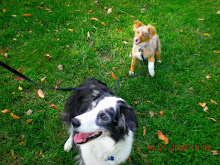
I am so happy and grateful to report that there have not been anymore seizures since yesterday at 5:21 am. Brady had a great day yesterday. He looked good, his eyes were bright and alert and from all indications he felt very good. We played fetch with his tennis ball for a really long time; he didn't want to quit but I made him take a break and then later went for another round of fetch. He even got to go for a ride to the pharmacy to pick up his new dose of medicine.
Per Dr. Katherman's instructions, I increased his Zonisamide dose by 50mg starting with last night's evening dose. So he will be getting 250mg of Zonisamide in the morning and 250mg in the evening for a daily total of 500mg. Phenobarbital and Potassium Bromide doses will remain the same.
Praying that things will continue to go well and that we will have a long seizure free stretch!
Wednesday, January 27, 2010

Tuesday, January 26, 2010
Seizure Monster rears its ugly head again!
At 5:21am Brady had another seizure which makes two seizures in 23 hours. It was pretty much the same as the one he had at 6:41am yesterday morning. He didn't lose bladder control and again it was a little shorter in duration than past ones lasting about a minute or so. I inserted the valium suppository at 5:24am once the convulsing had stopped and he was lying there calmly as he does before he regains consciousness and is aware of anything. By 5:25am he was up and on his feet. At 5:30am I gave him some rescue remedy on a small piece of bread along with two-thirds of a cup of dog food. At 5:35am I gave him all of his meds. Brady recovered quickly, although this time he was a bit wobbly and unsteady on his feet at first but that improved in a matter of 20 minutes or so.
I called Dr. Katherman and fortunately was able to speak with her right away. She is increasing his Zonisamide by 50 mg twice per day. The intention is to see some obvious control over his seizures and there is room to increase the dosage according to his latest blood work. Hopefully, the Zonisamide will be more effective at an increased dose since it is now obvious that the initial dose that he started on isn't doing the trick.
I am thankful that Brady has recovered from both of the seizures quickly and seems to be doing fine. I am also thankful that as hard as it may be to see this, both Jeff and I are handling things a little better each time. But I must say, I really despise this ugly seizure monster and want it to go away!!!
I called Dr. Katherman and fortunately was able to speak with her right away. She is increasing his Zonisamide by 50 mg twice per day. The intention is to see some obvious control over his seizures and there is room to increase the dosage according to his latest blood work. Hopefully, the Zonisamide will be more effective at an increased dose since it is now obvious that the initial dose that he started on isn't doing the trick.
I am thankful that Brady has recovered from both of the seizures quickly and seems to be doing fine. I am also thankful that as hard as it may be to see this, both Jeff and I are handling things a little better each time. But I must say, I really despise this ugly seizure monster and want it to go away!!!
Monday, January 25, 2010
Making Tracks to Defeat Canine Epilepsy
Please Mark your Calendars: PURPLE DAY is March 26, 2010
Please wear purple on March 26th!
To support Epilepsy Awareness Globally for canines and humans!
Same Disease Different Species
Toby's Foundation is partnering with www.purpleday.org
Can you and your dog help by wearing purple on March
26th to increase epilepsy awareness for canines and humans and show
your support for this worldwide initiative?
We are representing canine epilepsy in this effort
though we want to show our support for both humans and canines affected
by this disease.
Wearing something purple is a simple way for you to
reach out and help so please wear purple on March 26, 2010. Purple is
the international color for Epilepsy!
For more info please visit us at
www.tobysfoundation.org/whatsnew.htm
and click on Purple Day.
Many people do not realize that dogs suffer from this
disease.
At the American Epilepsy Society conference Dr. Ned Patterson
tells people "Same Disease Different Species"
By joining together we can help increase epilepsy awareness worldwide for
people and their pets with epilepsy.
Please wear purple on March 26th!
To support Epilepsy Awareness Globally for canines and humans!
Same Disease Different Species
Toby's Foundation is partnering with www.purpleday.org
Can you and your dog help by wearing purple on March
26th to increase epilepsy awareness for canines and humans and show
your support for this worldwide initiative?
We are representing canine epilepsy in this effort
though we want to show our support for both humans and canines affected
by this disease.
Wearing something purple is a simple way for you to
reach out and help so please wear purple on March 26, 2010. Purple is
the international color for Epilepsy!
For more info please visit us at
www.tobysfoundation.org/whatsnew.htm
Many people do not realize that dogs suffer from this
disease.
At the American Epilepsy Society conference Dr. Ned Patterson
tells people "Same Disease Different Species"
By joining together we can help increase epilepsy awareness worldwide for
people and their pets with epilepsy.
Brady's seizure clock re-starts
I'm sad to report that Brady's seizure clock had to be re-set this morning. At 6:41am, our sweet boy had a seizure. Of course, we've have hoped and prayed that he wouldn't have any further seizures, but we must be realistic and as hard as it may be, we must deal with them as they come. It has been 41 days since the last seizure, one day short of making it 6 weeks. Although I consider this seizure a grand mal it seemed to be less violent and less severe than those of the past. There was no loss of bladder control which is a positive since normally he does lose bladder control. There were other positives as well, it was of shorter duration, approximately 1.5 minutes, 2 minutes at the most of actual seizure activity, the convulsions weren't as violent as usual. The teeth gnashing occurred but also seemed less severe. There was plenty of drool but not an enormous amount as in the past. Since the seizure took place on our bed, I sort of laid over his body and held him close to the bed. Once the seizing stopped I picked him up and laid him on his bed on the floor so that once he came around there would be no chance of falling off the bed. The post ictal phase was much better than usual, there was almost no pacing and he seemed calmer and not as anxious as in the past. Also he didn't seem very ravenous at all, although I did give him two-thirds of a cup of dog food, and normally he is literally starving. The seizure happened only 4 minutes before he was due his medication. He recovered quickly and was on his feet by 6:46am, so all said and done it was 5 minutes total (from the minute the seizure began until he was on his feet again) as opposed to the usual 7-8 minutes. At 6:46am I inserted the rectal valium and at 6:48am gave him all of his medication plus quite a few drops of rescue remedy on a small piece of bread. Over all it was more toned down than the others. He wasn't wobbly or uncoordinated when he got up and walked around. His balance was good and he was able to walk down the stairs on his own.
At that point he was just fine and we went about our normal activity. We didn't get to go on our normal morning walk because it was pouring rain, but he would have been fine to go had it not been raining. Needless to say I have been watching him like a hawk since and am so thankful that I am able to do so.
I spoke with his neurologist on the phone and she recommends that we don't do anything different at the moment with the Zonisamide. There is room to move up to a higher dose if needed but it hasn't been long enough to say for sure if we need to. Also his Potassium Bromide dosage was just changed at the end of October and every time the dose is changed for that drug, it takes another 4 months to reach a steady state. It should be at a steady state by the end of February. Dr. Katherman is looking for better control of his seizures than only going 6 weeks between seizures, but said it will take some time to see a good trend. She is looking for that trend to happen over a period of time. So for now we will leave all meds at their current dose and pray that no seizures come again for a long while or never again would be a dream come true. Hopefully this time we will see much more time pass on his seizure clock and of course we will continue to pray that we will never have to re-set that clock and that he can become seizure free forever.
We put this all in God's hands long ago and will continue to do so. I will never forget what someone who lives with an epileptic dog told me recently and that is: God only gives these special needs dogs to those people who can handle it. I believe that applies to all special needs, not just epilepsy, and not just dogs, but all pets and people for that matter. Reminding myself of that statement truly helps me through the rough spots when life is not always smooth sailing. I am thankful that Brady belongs to us, that he is our dog to take good care of, and that we are able to do all we can do to help him through this dreaded disease. At times it feels devastating but then I quickly remember that we must be strong in order to help him when he needs it most.
At that point he was just fine and we went about our normal activity. We didn't get to go on our normal morning walk because it was pouring rain, but he would have been fine to go had it not been raining. Needless to say I have been watching him like a hawk since and am so thankful that I am able to do so.
I spoke with his neurologist on the phone and she recommends that we don't do anything different at the moment with the Zonisamide. There is room to move up to a higher dose if needed but it hasn't been long enough to say for sure if we need to. Also his Potassium Bromide dosage was just changed at the end of October and every time the dose is changed for that drug, it takes another 4 months to reach a steady state. It should be at a steady state by the end of February. Dr. Katherman is looking for better control of his seizures than only going 6 weeks between seizures, but said it will take some time to see a good trend. She is looking for that trend to happen over a period of time. So for now we will leave all meds at their current dose and pray that no seizures come again for a long while or never again would be a dream come true. Hopefully this time we will see much more time pass on his seizure clock and of course we will continue to pray that we will never have to re-set that clock and that he can become seizure free forever.
We put this all in God's hands long ago and will continue to do so. I will never forget what someone who lives with an epileptic dog told me recently and that is: God only gives these special needs dogs to those people who can handle it. I believe that applies to all special needs, not just epilepsy, and not just dogs, but all pets and people for that matter. Reminding myself of that statement truly helps me through the rough spots when life is not always smooth sailing. I am thankful that Brady belongs to us, that he is our dog to take good care of, and that we are able to do all we can do to help him through this dreaded disease. At times it feels devastating but then I quickly remember that we must be strong in order to help him when he needs it most.
Monday, January 18, 2010
Blood work results are in---Great news!
I spoke with Dr. Katherman, Brady's neurologist, today and the results are finally in. His Zonisamide levels are in the therapeutic range where we want them to be. Therefore, the Zonisamide will remain at the current dose as will the Phenobarbital and Potassium Bromide. When he has been seizure free for 8 weeks, we will have a further discussion on his medication. But first of all, we have to be sure that without a doubt his seizures are under control. Brady continues to do well and is adjusting to the cocktail of drugs that he takes. He has just recently gotten back to his ball playing and is able to run and catch the ball as if he never missed a beat. That was something he really missed for awhile because he was just too uncoordinated to run and chase a ball without the risk of injury. He would literally tumble over and want to keep playing. Going up and down the stairs and jumping on the bed are now much easier tasks for him than when he was first trying to adjust to the combo of meds. There were some nights especially when we would carry him up or down the stairs because he was so unsteady on his feet and would so easily lose his balance. There were times when he would be so weak in the rear that he's rear end would just collapse. We feared that he'd fall if left to navigate the stairs on his own. We are so thankful that he is adjusting to the meds and that he can do his everyday normal routine again because for one, playing ball is on the top of his priority list. It's wonderful to see the sparkle back in his eyes again too! For the most part he is as agile and coordinated as before. When he is just rising from being asleep or is tired, he may be a little clumsy, but hey, that's okay!
Thank you God for leading us to Dr. Katherman and thank you Dr. Katherman for being such a competent, knowledgeable neurology vet. Please let the medications continue to do their job!
Thank you God for leading us to Dr. Katherman and thank you Dr. Katherman for being such a competent, knowledgeable neurology vet. Please let the medications continue to do their job!
Sunday, January 17, 2010
Living with an epileptic dog
Most importantly, LIVE
Epileptic pets can lead happy,
fulfilling lives.
Do what's enjoyable; all the things that make anyone keep a pet. You may need to make some adjustments to avoid dangerous situations, but go have fun with your companion! Concentrate on the time your pet is happy and doing well, rather than dwelling on the small percentage of time when there are problems.
Most epileptic pets can live relatively normal lives. We can successfully control epilepsy in over 2/3 of the cases. These dogs may require daily medication, but they can still run and play and love. Even the best controlled epileptic will still have some seizures, but usually we can keep their occurrence down to a tolerable level. The number of dogs who have serious side effects from the medications is very small. Some may experience sedation, but this does not prevent them from being loving companions. They don't need to stay awake in class or behind the wheel, so if they need an extra nap in the afternoon, who cares!
Unless the seizures are due to low blood sugar or heart disease, there is no reason to restrict exercise in your pet with epilepsy. While swimming carries some risk of drowning should the dog have a seizure while in the water, most seizures occur when the pet is relaxed and quiet or sleeping. Thus the odds of having a seizure while swimming are pretty remote. Canine life vests are also an option.
An epileptic needs a high quality, balanced diet. Any top quality commercial dog food will supply the needs of your pet. Diets based largely on table food or less expensive commercial foods may require supplementation to maintain optimum health in your pet. Consult your veterinarian for specific recommendations.
Epileptic pets can lead happy,
fulfilling lives.
Do what's enjoyable; all the things that make anyone keep a pet. You may need to make some adjustments to avoid dangerous situations, but go have fun with your companion! Concentrate on the time your pet is happy and doing well, rather than dwelling on the small percentage of time when there are problems.
Most epileptic pets can live relatively normal lives. We can successfully control epilepsy in over 2/3 of the cases. These dogs may require daily medication, but they can still run and play and love. Even the best controlled epileptic will still have some seizures, but usually we can keep their occurrence down to a tolerable level. The number of dogs who have serious side effects from the medications is very small. Some may experience sedation, but this does not prevent them from being loving companions. They don't need to stay awake in class or behind the wheel, so if they need an extra nap in the afternoon, who cares!
Unless the seizures are due to low blood sugar or heart disease, there is no reason to restrict exercise in your pet with epilepsy. While swimming carries some risk of drowning should the dog have a seizure while in the water, most seizures occur when the pet is relaxed and quiet or sleeping. Thus the odds of having a seizure while swimming are pretty remote. Canine life vests are also an option.
An epileptic needs a high quality, balanced diet. Any top quality commercial dog food will supply the needs of your pet. Diets based largely on table food or less expensive commercial foods may require supplementation to maintain optimum health in your pet. Consult your veterinarian for specific recommendations.
Saturday, January 16, 2010
Understanding Canine Epilepsy
What is a seizure?
A seizure occurs when there is a misfiring of neurons in the brain, causing an "electrical storm" of brain activity. In response to this brain activity, the dog's muscles react accordingly resulting in the physical manifestation that we recognize as a seizure.
What are some causes of seizures in dogs?
Seizures can be caused by a number of things, including, but not limited to:
- head trauma
- congenital defects such as hydrocephalus
- infectious diseases such as distemper or cryptococcosis
- hypoglycemia
- hypothyroidism
- ingestion of poisonous substances
- reaction to vaccinations or certain medications
- reaction to flea/tick preventatives
- organ disease
- bacterial infection
- brain tumor
These acquired causes may result in singular or multiple seizures. If seizures happen recurrently then the disorder is called "epilepsy". If the cause of the seizures is unknown, then it is termed "idiopathic epilepsy", which basically means that the dog is having seizures but we don't know why.
What is a seizure trigger?
A seizure trigger is some stimulus that can result in a seizure in certain dogs. What is a trigger for one dog may not be a trigger for another dog. When a trigger exposure level surpasses an individual dog's seizure threshhold, then a seizure results.
What are some common seizure triggers for dogs?
Some seizure triggers are more common than others. They include, but are not limited to:
- vaccinations, particularly Rabies vaccinations
- flea/tick preventatives, particularly Ivermectin (Ivermec)
- nutritional factors including protein levels, grains, chemical preservatives, artificial colors or flavors
- turkey meat
- herbs, plants or fragrances of rosemary or lavendar
- stress such as thunderstorms, fireworks, excitement, visitors, etc.
- changes in weather, air pressure, humidity
- loud noises or flashing lights
- over-exertion
- chemicals such as household or industrial cleaners, detergents, pesticides, herbicides, fungicides, fertilizers
- scented products such as air fragrences, perfumes, deoderizers, detergents/cleaners
How do I know if my dog is having a seizure?
Seizures can manifest themselves in a variety of different ways. They are normally divided into two catagories: general and partial. General seizures result from "electrical storm" occurs everywhere. Partial seizures result when the "electric storm" is limited to one area.
Further, there are a variety of different types of seizures:
Grand Mal (General tonic clonic) - These seizures involve the entire body of the dog. They will go rigid, collapse, and then begin flailing their legs in a characteristic "running" motion. Often also accompanying grand mal seizures is jaw chomping, excessive drooling, uncontrolled urination or defecation, labored breathing, failure to respond/rouse, vocalizations.
Petit Mal (Partial or Focal) - These seizures manifest themselves in one area of the body only. Simple focal seizures affect the area of the brain involved in movement. As such, the dog is often conscious and aware of their surroundings, while presenting twitching in one area of their body, commonly the face. A complex focal seizure affects the area of the brain involved in behavior. This will often result in the dog losing awareness of their surroundings while exhibiting abnormal behavior. Common behaviors are "fly snapping" or senseless running with seemingly little to no control. Complex focal seizures are also sometimes referred to as psychomotor seizures.
My dog had a seizure, should I take him to the vet?
Eventually, yes. But there is generally no need to rush to the vet immediately. If possible, allow the dog to recover from the seizure before adding the extra stress of a car ride and a vet visit.
Situations when you should rush to the vet IMMEDIATELY are:
- if the seizure lasts longer than 5 minutes (status epilepticus)
- if there are multiple seizures within 24 hours (clusters)
If the seizure lasts less than 5 minutes, the dog does not appear injured or in immediate danger, and is recovering safely on their own, then there is nothing that the vet will do at that moment. You would be better off to call your vet and let them know that your dog has had a seizure and follow their directions from there. Generally, allowing the dog to recover on their own and then scheduling a vet appointment for your soonest convenience is sufficient.
What do I do if my dog has a seizure?
First of all, stay calm! Gently move the dog to an area that is safe. If they have collapsed, move them away from stairs, corners, furniture or other hard objects that they could injure themselves on. If they are on furniture, ensure that they cannot fall off.
Keep your fingers away from the dog's mouth. In humans, there is a risk of the human swallowing their tongue when they have a seizure. This is not a risk for dogs. But there is a risk of your dog unintentionally biting you if you get your fingers in the way. The last thing you need is to have to run to the hospital for stitches and a tetanus shot when your dog is having a seizure.
Lower any bright lights and turn down the volume of any televisions or radios in the area. Limit extra stimulus that may cause undue stress to the dog as they are seizing.
Speak gently and softly to the dog, do not try to stop them from seizing or "wake them out of it".
After the seizure ends, allow the dog to recover at their own pace. Many dogs will be disoriented, confused, or uncoordinated when the seizure ends. Some dogs may be temporarily blind, not recognize you or other family members, know their own name or common commands. Pacing and aggitation is a common symptom after a seizure. Ensure that the dog does not stumble into corners or down stairs or get stuck behind furniture or in tight corners. Allow the dog to pace if they so desire. Once they are SAFELY able, offer the dog some fresh water to drink or a SMALL bite to eat (a single dog cookie, a couple of kibbles, etc.). Blood sugar levels can drop significantly during a seizure, and failing to raise them can result in more seizures. But be careful, raising the blood sugar too quickly can also result in more seizures. So be sure to only offer a small amount of bland food or treats.
The post-seizure (post-ictal) stage can last from a couple of minutes to a couple of hours. During that time, ensure that the dog remains calm, comfortable and safe.
It is important to keep a seizure diary for every seizure that your dog has. This will help you to recognize patterns and hopefully narrow down a trigger for your dog that may help in prevention of more seizures. In the diary, note the date and time of the seizure, how long it lasted, what the dog did during the seizure, any abnormal behaviour you noticed prior to the seizure, the weather of that day, what your dog ate that day and the day prior, what they did that day and the day prior, any changes in environment, any new cleaning products/chemical agents in or around the house, any activity in the neighborhood or places that you have visited with your dog recently, any recent vaccinations, medications or flea/tick treatments, and any other information that you can think of, even if it sounds silly at the time.
When I visit my vet after my dog has a seizure, what tests should I ask for?
The general course of action is to order a CBC and a Chemistry Panel. This will screen for infection/immune deficiency and organ health and function.
Something that is often not suggested by veterinarians, but is very important to screen, is a 6-panel thyroid test. There has been significant research into the correlation of hypothyroidism and seizures in dogs. Interpretting the results should take into consideration the dog's age, breed, size, and physical activity level. In many cases, a thyroid test may come back "within normal range", but still be lower than what is recommended when taking into consideration individual variances.
If all of those tests come back clear, then you may want to consider abdominal ultrasound and/or x-rays. A final step would include MRI, though this is an expensive option so is often not taken.
When should I consider medication for seizures?
Medication generally becomes an option if there are multiple seizures within the course of a month. If they are occurring less frequently than that, the risks of medication outweigh the risks of the seizures.
What are the primary medication options available for my dog?
There are two primary medications for treating epilepsy: Phenobarbital (Phenobarb) and Potassium Bromide (KBr)
Phenobarb is effective in 60-80% of idiopathic epilepsy and takes 1 to 2 weeks to take effect. Common side effects of Phenobarb include ataxia, excessive thirst, excessive hunger, incontinence, lethargy and exciteability. These symptoms will normally disappear after a couple of weeks. If they persist, contact your veterinarian. Phenobarb is processed through the liver, so close monitoring is essential (see below).
KBr does not have the same liver effects as Phenobarb, though it can be significantly more troublesome to the digestive system so should be given with food. KBr takes up to 3 to 4 months to reach full effect so should not be used if immediate control is required. To get around this time delay, a higher loading dose is often prescribed for the first week. When on KBr, chloride intake food levels must be monitored closely, and any switches in food brand or formula must be taken very gradually so as to not disrupt the levels of KBr in the blood. Common side effects include excessive hunger, excessive thirst, incontinence, exciteability, lethargy, ataxia, nausea, diarrhea, or bromide toxicity. These symptoms should disappear within a couple of weeks. If they do not, contact your veterinarian.
Some dogs require a combination of Phenobarb and KBr to obtain the best control.
Other seizure medication options include Keppra, Felbamate, Primidone, Gabapentin and Zonisamide.
What precautions should I take after medication is prescribed?
Routine monitoring is essential, regardless of which medication is prescribed.
If your dog is on Phenobarbital:
- a blood test to determine the level of Phenobarb in the blood is required 2 weeks after starting treatment
- a blood test to determine the level of Phenobarb in the blood is recommended every 6 months afterwards
- a chem panel to monitor GGT, ALT, and alkaline phosphatase (indicating liver function) is strongly recommended every 3-4 months
If your dog is on Potassium Bromide:
- if your dog was given a loading dose, then a blood test to determine the level of KBr in the blood is recommended after 1 week of treatment
- if your dog was not given a loading dose, a blood test to determine the level of KBr in the blood is recommended after 4-6 weeks of treatment
- subsequent blood tests to determine the level of KBr in the blood is recommended every 6 months afterwards
- a chem panel is recommended every 4-6 months to monitor organ health
What can I do at home to prevent more seizures?
There are a number of steps you can take at home to prevent additional seizures or to lessen the severity of impending seizures.
Nutrition plays an important role in our dogs lives. A home prepared diet, either cooked or raw, is recommended so as to avoid unnecessary fillers or grains, chemical perservatives, flavors, colors, or synthetic nutrients. Preparing meals for your dog takes significant research and effort, so should not be taken lightly. Though it certainly isn't rocket science, so with adequate reading and commitment, it is possible to provide a natural, safe, and balanced home prepared diet for your dog. If you are unwilling or unable to prepare a diet for your dog, then a high quality kibble is essential. For information on how to choose a good quality kibble, consult the Dog Food Analysis website and the Dog Food Project website. In general, if you can purchase the food at your favorite grocery store or at your vet's office, it is NOT a good quality food and is potentially doing more harm than good.
Changing how you clean and treat your home, yard, and garden can make a significant difference in the severity of seizures that your dog may have. Take into consideration the amounts of chemicals that you use around the house. Attempt to replace those chemicals with natural alternatives and limit the use of chemicals to only those that are absolutely necessary.
Consider a minimal vaccination protocol with your dog. Titer testing is an available alternative to vaccinations, so discuss that option with your veterinarian. Also source out natural alternatives to pest prevention. There are a variety of dog-safe natural insect repellents on the market, so check out your options.
Most importantly, do some independent research and reading. Veterinarians are not guaranteed to know everything about epilepsy. You know your dog best, and you are the best person to take the initiative to make a difference in your dog's life. Don't rely on everything that your vet recommends without asking questions, making suggestions, or requesting explanations. Take a pro-active stance in dealing with your dog's epilepsy, stand your ground for what you feel is right.
A seizure occurs when there is a misfiring of neurons in the brain, causing an "electrical storm" of brain activity. In response to this brain activity, the dog's muscles react accordingly resulting in the physical manifestation that we recognize as a seizure.
What are some causes of seizures in dogs?
Seizures can be caused by a number of things, including, but not limited to:
- head trauma
- congenital defects such as hydrocephalus
- infectious diseases such as distemper or cryptococcosis
- hypoglycemia
- hypothyroidism
- ingestion of poisonous substances
- reaction to vaccinations or certain medications
- reaction to flea/tick preventatives
- organ disease
- bacterial infection
- brain tumor
These acquired causes may result in singular or multiple seizures. If seizures happen recurrently then the disorder is called "epilepsy". If the cause of the seizures is unknown, then it is termed "idiopathic epilepsy", which basically means that the dog is having seizures but we don't know why.
What is a seizure trigger?
A seizure trigger is some stimulus that can result in a seizure in certain dogs. What is a trigger for one dog may not be a trigger for another dog. When a trigger exposure level surpasses an individual dog's seizure threshhold, then a seizure results.
What are some common seizure triggers for dogs?
Some seizure triggers are more common than others. They include, but are not limited to:
- vaccinations, particularly Rabies vaccinations
- flea/tick preventatives, particularly Ivermectin (Ivermec)
- nutritional factors including protein levels, grains, chemical preservatives, artificial colors or flavors
- turkey meat
- herbs, plants or fragrances of rosemary or lavendar
- stress such as thunderstorms, fireworks, excitement, visitors, etc.
- changes in weather, air pressure, humidity
- loud noises or flashing lights
- over-exertion
- chemicals such as household or industrial cleaners, detergents, pesticides, herbicides, fungicides, fertilizers
- scented products such as air fragrences, perfumes, deoderizers, detergents/cleaners
How do I know if my dog is having a seizure?
Seizures can manifest themselves in a variety of different ways. They are normally divided into two catagories: general and partial. General seizures result from "electrical storm" occurs everywhere. Partial seizures result when the "electric storm" is limited to one area.
Further, there are a variety of different types of seizures:
Grand Mal (General tonic clonic) - These seizures involve the entire body of the dog. They will go rigid, collapse, and then begin flailing their legs in a characteristic "running" motion. Often also accompanying grand mal seizures is jaw chomping, excessive drooling, uncontrolled urination or defecation, labored breathing, failure to respond/rouse, vocalizations.
Petit Mal (Partial or Focal) - These seizures manifest themselves in one area of the body only. Simple focal seizures affect the area of the brain involved in movement. As such, the dog is often conscious and aware of their surroundings, while presenting twitching in one area of their body, commonly the face. A complex focal seizure affects the area of the brain involved in behavior. This will often result in the dog losing awareness of their surroundings while exhibiting abnormal behavior. Common behaviors are "fly snapping" or senseless running with seemingly little to no control. Complex focal seizures are also sometimes referred to as psychomotor seizures.
My dog had a seizure, should I take him to the vet?
Eventually, yes. But there is generally no need to rush to the vet immediately. If possible, allow the dog to recover from the seizure before adding the extra stress of a car ride and a vet visit.
Situations when you should rush to the vet IMMEDIATELY are:
- if the seizure lasts longer than 5 minutes (status epilepticus)
- if there are multiple seizures within 24 hours (clusters)
If the seizure lasts less than 5 minutes, the dog does not appear injured or in immediate danger, and is recovering safely on their own, then there is nothing that the vet will do at that moment. You would be better off to call your vet and let them know that your dog has had a seizure and follow their directions from there. Generally, allowing the dog to recover on their own and then scheduling a vet appointment for your soonest convenience is sufficient.
What do I do if my dog has a seizure?
First of all, stay calm! Gently move the dog to an area that is safe. If they have collapsed, move them away from stairs, corners, furniture or other hard objects that they could injure themselves on. If they are on furniture, ensure that they cannot fall off.
Keep your fingers away from the dog's mouth. In humans, there is a risk of the human swallowing their tongue when they have a seizure. This is not a risk for dogs. But there is a risk of your dog unintentionally biting you if you get your fingers in the way. The last thing you need is to have to run to the hospital for stitches and a tetanus shot when your dog is having a seizure.
Lower any bright lights and turn down the volume of any televisions or radios in the area. Limit extra stimulus that may cause undue stress to the dog as they are seizing.
Speak gently and softly to the dog, do not try to stop them from seizing or "wake them out of it".
After the seizure ends, allow the dog to recover at their own pace. Many dogs will be disoriented, confused, or uncoordinated when the seizure ends. Some dogs may be temporarily blind, not recognize you or other family members, know their own name or common commands. Pacing and aggitation is a common symptom after a seizure. Ensure that the dog does not stumble into corners or down stairs or get stuck behind furniture or in tight corners. Allow the dog to pace if they so desire. Once they are SAFELY able, offer the dog some fresh water to drink or a SMALL bite to eat (a single dog cookie, a couple of kibbles, etc.). Blood sugar levels can drop significantly during a seizure, and failing to raise them can result in more seizures. But be careful, raising the blood sugar too quickly can also result in more seizures. So be sure to only offer a small amount of bland food or treats.
The post-seizure (post-ictal) stage can last from a couple of minutes to a couple of hours. During that time, ensure that the dog remains calm, comfortable and safe.
It is important to keep a seizure diary for every seizure that your dog has. This will help you to recognize patterns and hopefully narrow down a trigger for your dog that may help in prevention of more seizures. In the diary, note the date and time of the seizure, how long it lasted, what the dog did during the seizure, any abnormal behaviour you noticed prior to the seizure, the weather of that day, what your dog ate that day and the day prior, what they did that day and the day prior, any changes in environment, any new cleaning products/chemical agents in or around the house, any activity in the neighborhood or places that you have visited with your dog recently, any recent vaccinations, medications or flea/tick treatments, and any other information that you can think of, even if it sounds silly at the time.
When I visit my vet after my dog has a seizure, what tests should I ask for?
The general course of action is to order a CBC and a Chemistry Panel. This will screen for infection/immune deficiency and organ health and function.
Something that is often not suggested by veterinarians, but is very important to screen, is a 6-panel thyroid test. There has been significant research into the correlation of hypothyroidism and seizures in dogs. Interpretting the results should take into consideration the dog's age, breed, size, and physical activity level. In many cases, a thyroid test may come back "within normal range", but still be lower than what is recommended when taking into consideration individual variances.
If all of those tests come back clear, then you may want to consider abdominal ultrasound and/or x-rays. A final step would include MRI, though this is an expensive option so is often not taken.
When should I consider medication for seizures?
Medication generally becomes an option if there are multiple seizures within the course of a month. If they are occurring less frequently than that, the risks of medication outweigh the risks of the seizures.
What are the primary medication options available for my dog?
There are two primary medications for treating epilepsy: Phenobarbital (Phenobarb) and Potassium Bromide (KBr)
Phenobarb is effective in 60-80% of idiopathic epilepsy and takes 1 to 2 weeks to take effect. Common side effects of Phenobarb include ataxia, excessive thirst, excessive hunger, incontinence, lethargy and exciteability. These symptoms will normally disappear after a couple of weeks. If they persist, contact your veterinarian. Phenobarb is processed through the liver, so close monitoring is essential (see below).
KBr does not have the same liver effects as Phenobarb, though it can be significantly more troublesome to the digestive system so should be given with food. KBr takes up to 3 to 4 months to reach full effect so should not be used if immediate control is required. To get around this time delay, a higher loading dose is often prescribed for the first week. When on KBr, chloride intake food levels must be monitored closely, and any switches in food brand or formula must be taken very gradually so as to not disrupt the levels of KBr in the blood. Common side effects include excessive hunger, excessive thirst, incontinence, exciteability, lethargy, ataxia, nausea, diarrhea, or bromide toxicity. These symptoms should disappear within a couple of weeks. If they do not, contact your veterinarian.
Some dogs require a combination of Phenobarb and KBr to obtain the best control.
Other seizure medication options include Keppra, Felbamate, Primidone, Gabapentin and Zonisamide.
What precautions should I take after medication is prescribed?
Routine monitoring is essential, regardless of which medication is prescribed.
If your dog is on Phenobarbital:
- a blood test to determine the level of Phenobarb in the blood is required 2 weeks after starting treatment
- a blood test to determine the level of Phenobarb in the blood is recommended every 6 months afterwards
- a chem panel to monitor GGT, ALT, and alkaline phosphatase (indicating liver function) is strongly recommended every 3-4 months
If your dog is on Potassium Bromide:
- if your dog was given a loading dose, then a blood test to determine the level of KBr in the blood is recommended after 1 week of treatment
- if your dog was not given a loading dose, a blood test to determine the level of KBr in the blood is recommended after 4-6 weeks of treatment
- subsequent blood tests to determine the level of KBr in the blood is recommended every 6 months afterwards
- a chem panel is recommended every 4-6 months to monitor organ health
What can I do at home to prevent more seizures?
There are a number of steps you can take at home to prevent additional seizures or to lessen the severity of impending seizures.
Nutrition plays an important role in our dogs lives. A home prepared diet, either cooked or raw, is recommended so as to avoid unnecessary fillers or grains, chemical perservatives, flavors, colors, or synthetic nutrients. Preparing meals for your dog takes significant research and effort, so should not be taken lightly. Though it certainly isn't rocket science, so with adequate reading and commitment, it is possible to provide a natural, safe, and balanced home prepared diet for your dog. If you are unwilling or unable to prepare a diet for your dog, then a high quality kibble is essential. For information on how to choose a good quality kibble, consult the Dog Food Analysis website and the Dog Food Project website. In general, if you can purchase the food at your favorite grocery store or at your vet's office, it is NOT a good quality food and is potentially doing more harm than good.
Changing how you clean and treat your home, yard, and garden can make a significant difference in the severity of seizures that your dog may have. Take into consideration the amounts of chemicals that you use around the house. Attempt to replace those chemicals with natural alternatives and limit the use of chemicals to only those that are absolutely necessary.
Consider a minimal vaccination protocol with your dog. Titer testing is an available alternative to vaccinations, so discuss that option with your veterinarian. Also source out natural alternatives to pest prevention. There are a variety of dog-safe natural insect repellents on the market, so check out your options.
Most importantly, do some independent research and reading. Veterinarians are not guaranteed to know everything about epilepsy. You know your dog best, and you are the best person to take the initiative to make a difference in your dog's life. Don't rely on everything that your vet recommends without asking questions, making suggestions, or requesting explanations. Take a pro-active stance in dealing with your dog's epilepsy, stand your ground for what you feel is right.
Subscribe to:
Posts (Atom)